
8 Markers of a Quality Kindergarten Program
Hey Folks -
Let's start off with a little reflection. Take a minute to reach back into your brain twenty, thirty, forty years ago. You were five and heading into Kindergarten.
What do you remember from that time?
What feelings are you noticing?
What did you like and what did you not like?
I've led many families through this exercise to help ground their understanding of what they want from their child's Kindergarten experience. I hear a lot of things like this:
"I remember the play kitchen and setting up a restaurant with my friends."
"I remember being outside and playing in the dirt under a tree."
"I remember my teacher feeling like a warm person."
Kindergarten today is different than it was thirty years ago. Kindergarten today is more like what 1st grade was back then. Schools have been pushing low-quality academics earlier and earlier and I don’t think it’s doing our kids any favors.
You might be in the phase of life called: Looking Frantically At Every Possible School Option Out There And Feeling Completely Overwhelmed By What It All Means (!!!)
I'm a parent too. I’ve been there and I--for sure--was frantically looking. But when I was looking at K options for my boys, I had a secret weapon: I'm a Teacher.
There are little things to look for when entering a school that probably go unnoticed by the untrained eye. These eight markers are what I'm looking for and thinking about when evaluating a kindergarten program.
8 Markers of a Quality Kindergarten Program
Time for Play
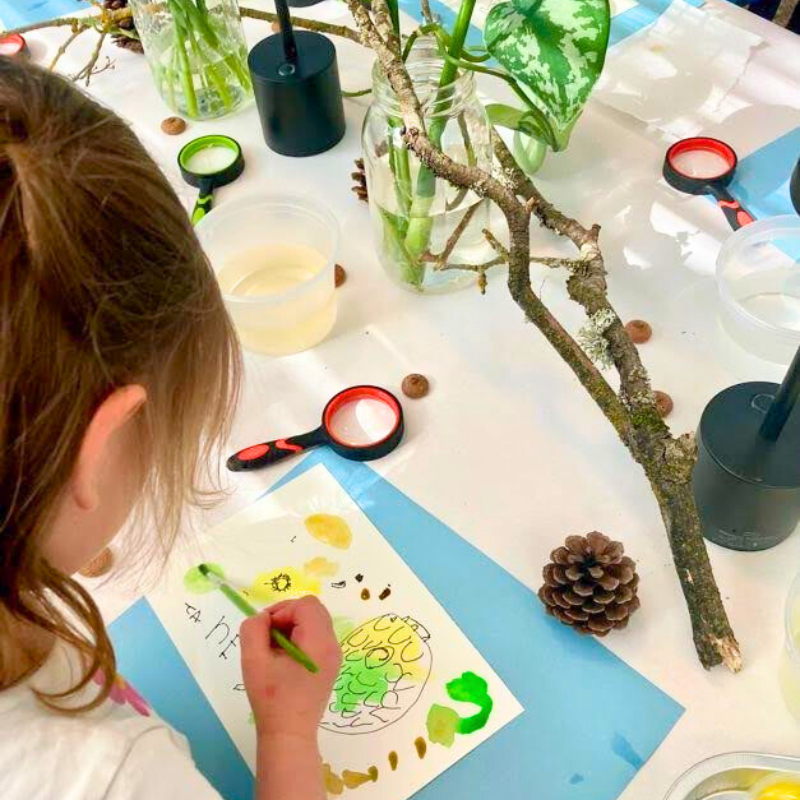
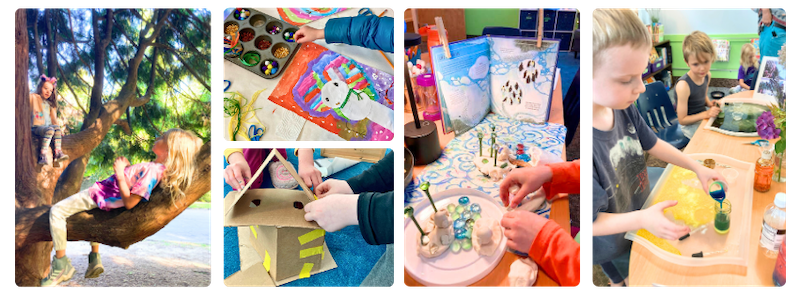
Hands down, I'm a play advocate. Kids learn through play. They practice new skills, build friendships, experiment, tinker, explore, wonder, and have fun. They process new information through play that allows their brains to store it and make sense of it in new ways.
Too many kindergarten programs have moved away from a daily routine filled with play and replaced these times with seat work. Five-year-olds still have a lot of energy to burn and an innate curiosity we want to nurture, not squash.
Question to ask: How much time do kids get for free play?
Nurturing Innate Curiosity
Kids are born curious. Remember all those "whys" they asked as three- and four-year-olds? Kids have a long school path ahead of them, and they should not be burned out by first grade. Slowing down and allowing kids to explore their curiosity gives an almost instantaneous boost to their self-esteem and well-being.
Curiosity is the skill we cultivate in scientists and mathematicians. It's what we want when our kids go to college. Schools can nurture this by offering lots of exploration into science, playful math, reading stories together, exploring the things kids are interested in, and just sitting in awe together watching a spider spin a web.
Question to ask: How do you bring student interests into your curriculum and support curiosity in the classroom?
Social Emotional Development
This is a foundational time in social-emotional development. We want our five-year-olds to be practicing turn-taking skills, self-regulation, caring for materials and people, learning how to work independently, following a routine, and becoming a good friend and citizen.
These skills are developed through games, movement, free play, class meetings, and achievable schedules that help kids feel positive about their time in the classroom. A huge part of your child’s year should be dedicated to learning about what it means to be a good human in community with others.
Question to ask: What does social emotional learning look like in your classroom?
Creative Expression
There is nothing quite like the hum of contentment when kids in my class are engaged in creative expression. Humans have a special interest in creativity, and there is something so grounding about giving time and space to explore it.
Many schools decide to drop funding for creative arts when money is tight, but giving kids a chance to be creative helps build their flexibility and perseverance. These skills also transfer to academic times when schools are engaging in high-quality academic work.
Question to ask: How are creative activities like art supported in your classroom?
Class Size & Student Teacher Ratio
Kinders need a lot of support! Have you ever hosted a birthday party with ten or more five year olds? Yeah… Public schools used to have two kindergarten teachers in each classroom. Now it’s standard for a group of 25 kindergarteners to be led by one teacher. I did this when I taught kindergarten in public school, and it requires the teacher to implement cat-herding strategies to keep chaos at bay. When you have that many kiddos in a room, you can’t slow down and notice the interesting bug that showed up on the carpet, or put out the sensory bin full of shaving cream. You have to practice standing silently in line and hushing off-topic comments on the rug.
After years of teaching and experiencing different class sizes, I’ve found fourteen kids to be the sweet spot. Enough for there to be group energy, but not so many that you have to become a cat-herder. You can still give each kid attention and know them well. You can listen to their musings and stories.
One thing to keep in mind is that some schools will say they have a student teacher ratio of 15:1. Make sure to ask if that means they have fifteen students with one teacher or thirty students with two teachers. Trust me, the energetic pressure kids create is exponential. A classroom with thirty kindergarteners would need more like three or four teachers to be able to do all the other markers of a quality K program I just listed.
Question to ask: How many students are in your class? How many adults are in the room?
Teacher Turnover Rate
As a teacher myself, teacher turnover rate gives me a TON of information. Why would teachers leave if they feel supported, well balanced, and fulfilled at their school? Sure, folks move, but if it feels like there are always new teachers, this is a red flag that the working environment causes Teacher Burn Out.
It also takes time to get in the flow of a new grade, align with the philosophy of the school, and connect as a staff. Things can be a little bumpy that first year in a new teaching job. If the school is supportive and otherwise has a strong teaching team, this can go virtually unnoticed. But I’m really wary of programs that are always looking for new teachers or have a large percentage of jobs to fill.
Question to ask: How long have your kindergarten teachers been teaching kindergarten at this school?
Growth Through the Grades
You’re not just picking a kindergarten! Your goal is to find an elementary school that becomes your community and is your kid’s favorite place to be. Yes, you read that right, school can be the place your kid wants to be.
Look ahead to what 3rd, 4th, 5th grade looks like. Can you get a picture of what upper elementary looks and feels like? Do you want your child to be like those kids? Every school has a culture, and your kiddo is going to take on the culture of that school.
Question to ask: What kinds of projects and experiences do the 4th and 5th graders have?
Communication
Something I hear families frustrated with in public school is the lack of communication they receive. They don’t really know what’s going on in the classroom and don’t hear much from their child’s teacher. How much communication and opportunities for involvement are important to you? Confident teachers running quality programs will be happy to set up meetings and let you inside the classroom.
Question to ask: What does parent communication and involvement look like?

Did you notice I didn’t mention worksheets and learning how to read? In my kindergarten classroom, we work on foundational literacy and math skills in a playful way. Each one of these markers will help support your child engage in high-quality academics as they get older and move through the learning process.