
Why I Left Public School
Hey Folks -
It’s nothing short of complicated, my relationship with public school. I believe deeply in a high-quality and free education system that supports our teachers and the young people we’re helping guide into the future.
My dream has always been to teach in my neighborhood school. Creating a classroom community that supports every kid that walks in my door. I love being part of the local community. I love walking to work and bumping into students out in our shared neighborhood.
There’s a beautiful image of what could be. I spent years working in public schools, hoping for this vision to be realized.
But there was always a dissonance. My passion for creating warm, welcoming spaces that hold kids through challenges – spaces that encourage creativity, deep thought, and play – was always at odds with district politics and a one-dimensional focus on standardized testing.
For years, I felt the anguish of choosing between what I believe is right for kids and supporting the public education system. I could choose public school and focus on my passion for providing free education to all, or I could leave public school and focus on my passion for actually delivering education.
The truth is, my teaching philosophy is not valued in public school. Teachers are not valued in public school. Kids and families are not valued in public school. I hate this and wish it weren’t true, but the system is broken. And meanwhile, this is my life I’m leading.
Do I have to fall on the sword of public school or can I create something worth being inspired by?
I was at a crossroads last year
I had been teaching part-time at a homeschool resource center and homeschooling my son after our public school couldn’t support him. We were ready as a family for the next stage of our lives together. And part of that meant it was time for me to get into the classroom full-time.
As I explored moving back into public school my stomach was tied in knots.
Teachers are not valued in public school.
Kids and families are not valued in public school.
Was I ready to head back into a system that doesn’t value me and the people I’m working for?
Was I ready to struggle and fight everyday for what I know is right?
I work hard, and am driven by big dreams, but I don’t want to be perpetually fighting when no one ever wins.
What it’s like to Teach in Public School
New teachers are thrown into the classroom after only two or three weeks of student teaching. Getting your credential typically only takes one year of extra schooling. There is virtually no time spent on special education, despite the fact that most public schools now follow an inclusion model that mainstreams kids with higher support needs into general education classrooms. (That’s a topic I’ll need to address in another post…)
When you get your own classroom, you’re alone in a room with 25 or 30 kids, terrified. The weight of being in charge of these small people’s future rests heavy on your shoulders. The threat of mutiny is always imminent.
You’re often handed a curriculum that has been stripped of any joy or curiosity. You’re required to test and assess and drill. No one has time to support you and you’re looked down on if you ask for help. They don’t care if you add in anything special. Just read the script and pass the test.
Meanwhile, you’re expected to be everything to these kids - reading specialist, math coach, therapist, emotional support, advocate, parent. The union does a pretty good job of ensuring a 40 minute lunch period, but you spend that whole time running around getting ready for the next lesson.
When you’re a teacher, you learn how to eat lunch while cutting paper, making copies, solving problems between kids who have come to your room at lunch time. The thing that shocks my friends with “normal” jobs the most is that you can’t go to the bathroom when you need to. You have to carefully monitor your water intake to ensure you only need to pee at certain times.
Then there’s the supplies you pay for out-of-pocket. Because you’re passionate about teaching, and the public school classroom is a sad, resource-lacking place. I’ve spent my own salary bringing in the little “extras” that make the classroom feel like somewhere kids want to spend time: lamps, plants, a step stool so five year-olds can reach the classroom sink, art materials, rugs, books, and games. I’ve also had to bring in the essentials to do my job: an adult sized chair, a printer plus ink, my personal computer.

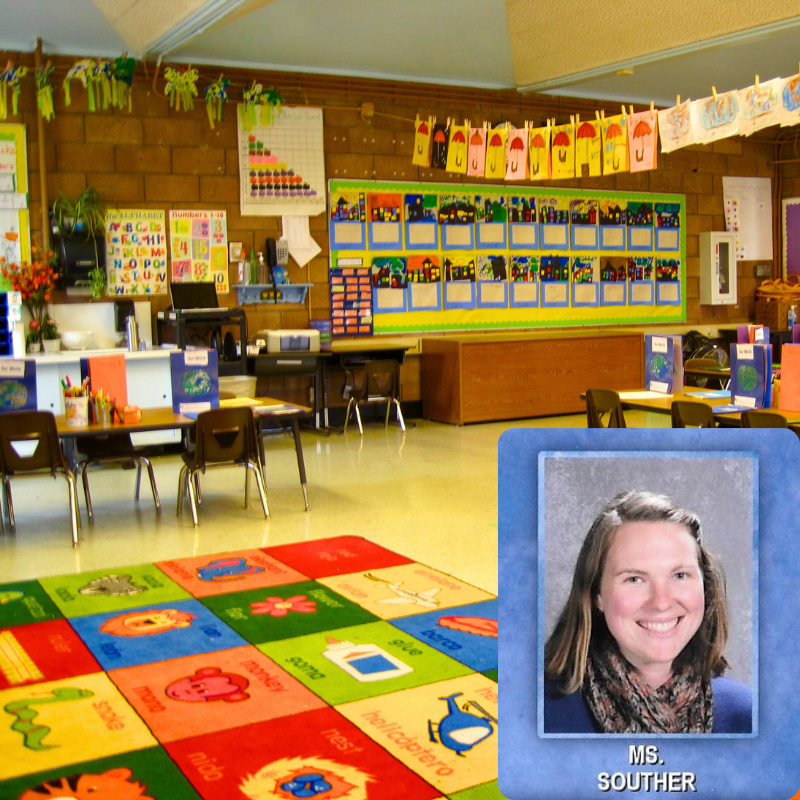
When I entered my first public school teaching position–a kindergarten classroom in a large district–there was no rug for the kids to sit on. In kindergarten, the rug is the meeting place for the community–it’s the center of the kindergarten world. It’s where read-alouds, and discussions, and games, and learning happens. If I wanted a rug for my kids, I had to independently make it happen, either with my own funds or by badgering parents for donations.
Then at the end of a grueling year, you’re fired.
Because new teachers are hired as temporary staff.
Yes, you’re typically hired again the next year, but this could be a temporary position again. And in a new classroom or school within the district. This goes on until finally they put you on the track to become permanent.
I made it to Permanent Status and this felt like a huge feat, but job insecurity does not end there. Sure, they can’t fire you for no reason anymore, but budget cuts, enrollment numbers, and seniority all play into the sense that you could lose your job at any moment.
When I made it to Permanent Teacher, I was working in a job share in a 1st grade classroom. My classroom partner and I happily worked together for two years before another teacher–with more seniority than me–thought it looked like a great gig and wanted to take it from me. Despite high reviews from my administration and partner teacher, this other teacher had full right to take the job from me because she had been working at the district longer.
I spent three months sitting in uncertainty about what my position would be the following year. I had to engage in numerous uncomfortable conversations with the administration and this other teacher–who I thought was my friend–to fight for my position.
As far as I can tell, most other career paths hire you into positions with the assumption that you will stay hired until you want to move, or, I suppose, you prove yourself incompetent.
After months of turmoil and fighting, I was able to save my job only by a legal loophole–the position they were going to transfer me to required a credential I don’t have.
So last year it was time for me to decide if I would head back into that broken system again.
And my brain and body said–no.
I have boundaries, and can’t compromise my working conditions for the sake of supporting public school. It’s heart-breaking that we as a society can’t value education and those that choose it as a career. But, that’s the landscape we’re currently in.
Finally deciding to say goodbye to public school opened my mind to the possibilities that lie ahead – building a new school that supports its teachers, where asking for help is encouraged, continued learning is celebrated, and time to think and plan are just given.
Osoberry School was born out of a need for something better for teachers, for kids, for families, and for me.